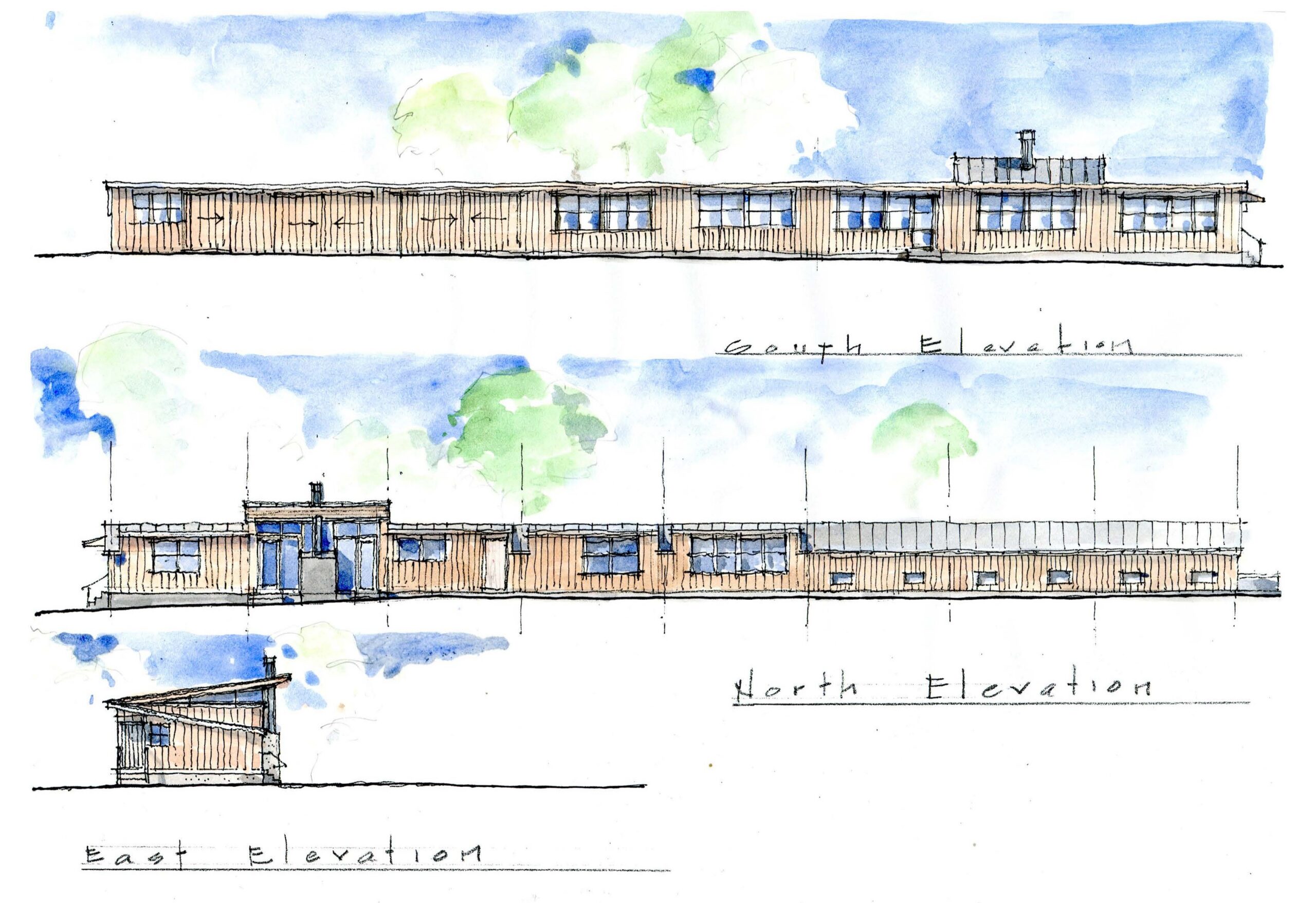
Willow Grove Chicken Coop Renovation - Olney, MD
Building Footprint: 1,914 sqft
Scope of Work: Renovation to an existing 3,200 sqft chicken coop to be refurbished into a one level guest house

Set within the rolling landscape of northeastern Montgomery County, the Willow Grove property holds deep historical significance as part of one of the region’s original Quaker settlements. The site, anchored by an 1850s farmhouse built by Roger Brooke VI, a direct descendant of James Brooke, includes a series of agrarian outbuildings that reflect a working farmstead’s evolution over time. Among these is a strikingly long, low-slung chicken house built around 1913. The structure has been restored and adaptively reused, transforming a dilapidated farm building into a thoughtfully designed guesthouse, exercise space, storage area, and smaller functioning coop.

Originally an eight-bay, 20’ x 160’ shed-roofed wood frame structure, the coop had suffered decades of neglect, with failing concrete footings, rotted framing, and a patchwork of degraded siding. The renovation required significant structural intervention, including new slab and footing work, full roof replacement with historically appropriate 5V-crimp metal roofing, and re-framing much of the superstructure. Rather than replicate the past verbatim, the architectural approach was to retain the building’s essential identity while allowing for measured transformations. Five of the eight bays were reimagined, raising the rooflines and introducing a new reverse-shed volume punctuated by a stone chimney at the core living space, an addition that distinguishes the intervention without overwhelming the building’s vernacular rhythm.
Carefully sourced new materials and extensive reuse of existing ones reinforce the project’s respect for its agricultural heritage. Salvaged framing timbers, oak floorboards, and sheathing were cleaned, milled, and reintroduced into the interior architecture, becoming cabinetry, paneling, and flooring that tell the story of the original structure through their material presence. A central kitchen island, composed of reclaimed wood and local stone, becomes a sculptural anchor – blending functionality with the tactile honesty of the place. Every element, from the siding profile to the window placements, was carefully considered in relationship to the original massing and site context.