The Old Hopkins Road House - Clarksville, MD
Team:
INTECaec (Architecture)
Peter Neubauer (Structural and Mechanical)
Dean Packard (Civil)
Lorax (Living Building Challange Consultant)
Pando Alliance (LEED Consultant)
Peabody Architects (Energy Consultant)
Passive to Positive (Passive House Consultant)
Natural Resources Design, Inc. (Landscape Design)
Maryland Custom Builders (Builder)
Lead Architect: Miche Booz
Year completed: 2014
Building Footprint: 1,953 sqf
Scope of Work: New passive house that pushes efficiency boundaries to a new level. Designed to sustain its occupant’s health, benefit the surrounding community and protect the environment. The intent is to promote the effective use of land, to use no harmful measures or materials, eliminate the generation of carbon over the life of the project, use only the water available on site, and have no water runoff.
Awards:
2020 AIA Maryland Excellence In Design Honor Award
2018 Passive Projects Design Competition Source Zero Winner
2018 The Passive House Institute US Awards the Designation of PHIUS
2017 AIA Potomac Valley Excellence In Design Awards Citation Award
2016 LEED Homes Platinum Award
2014 The U.S. Green Building Council Maryland Chapter Wintergreen Project Award for Residential
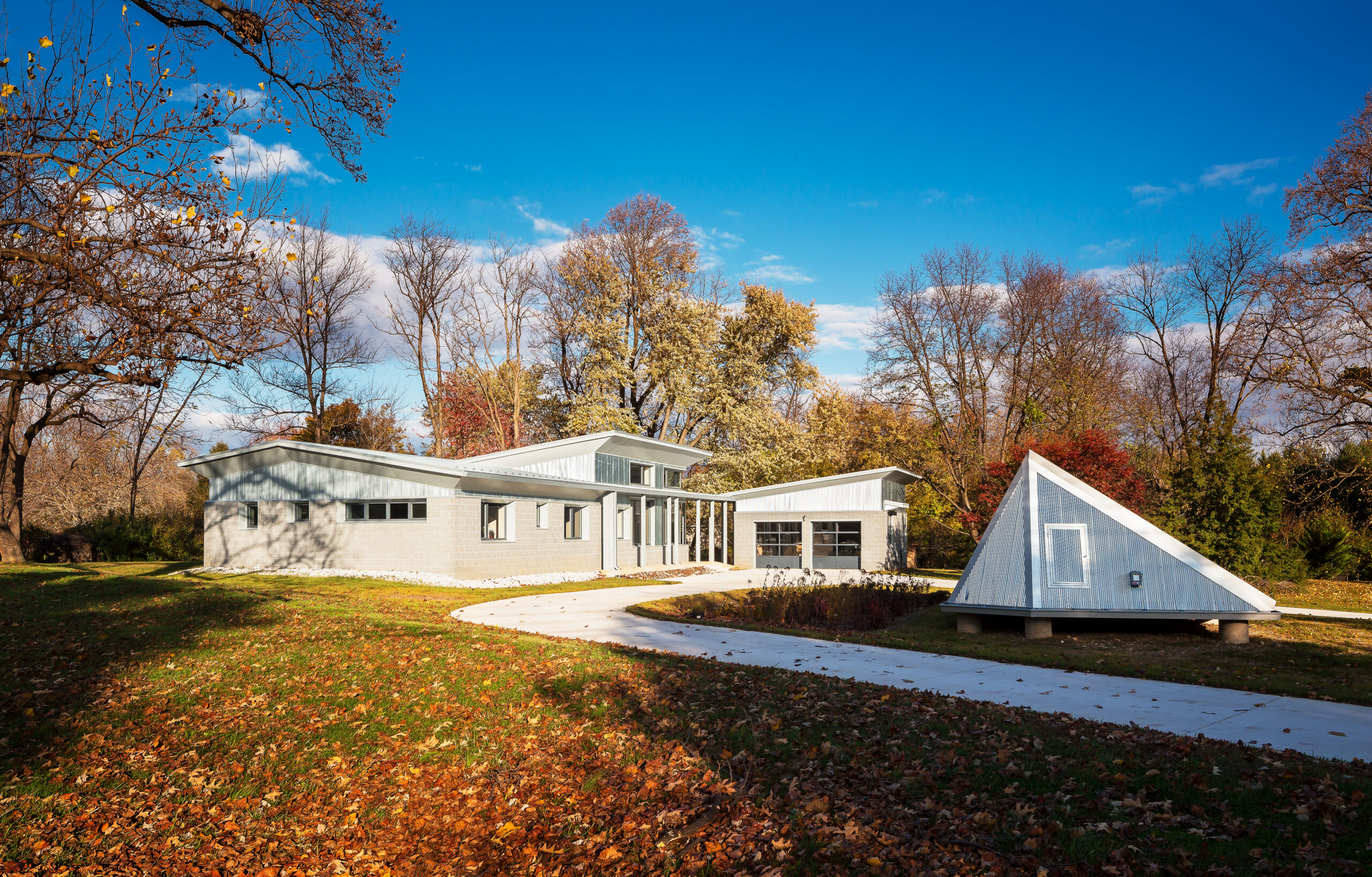
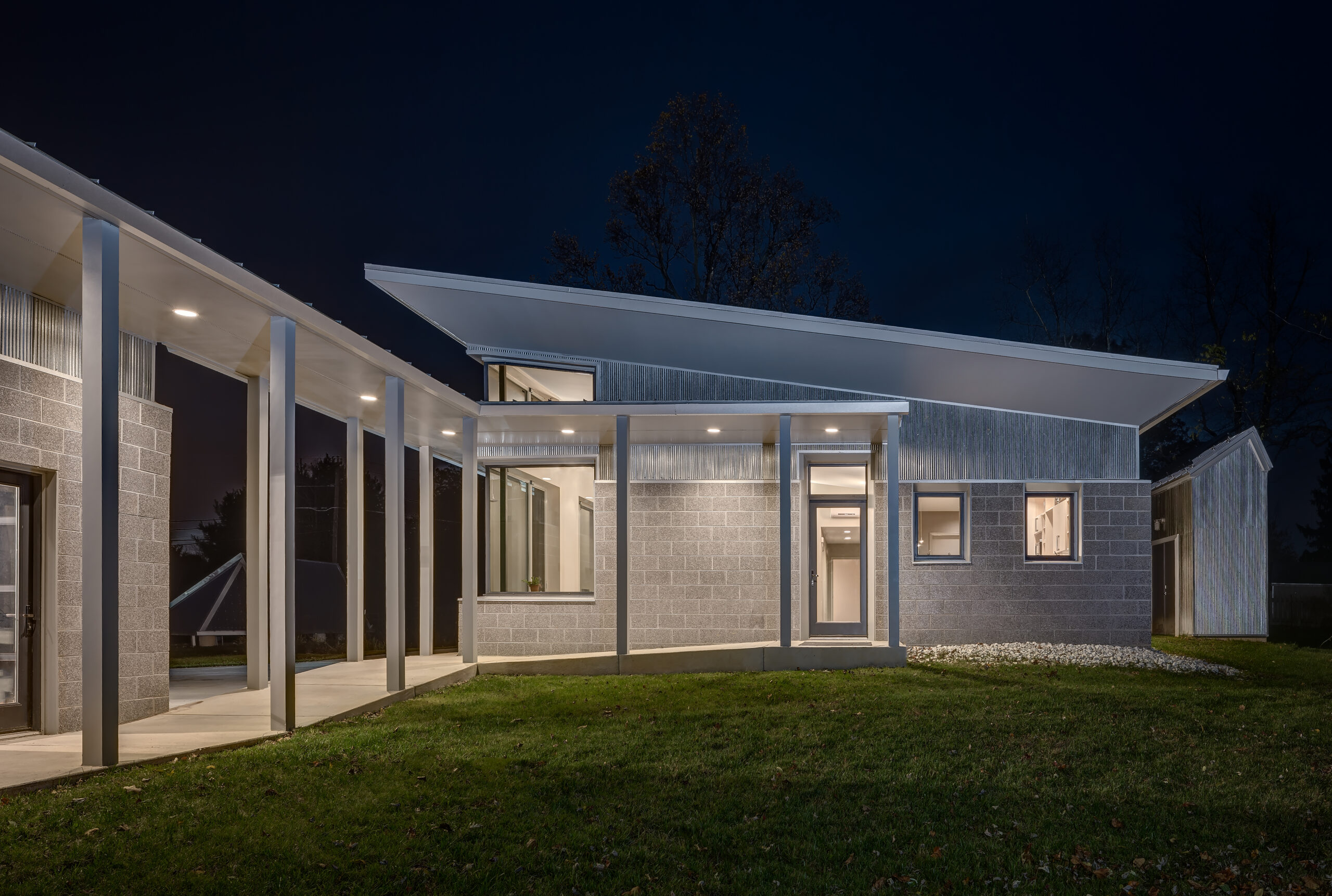
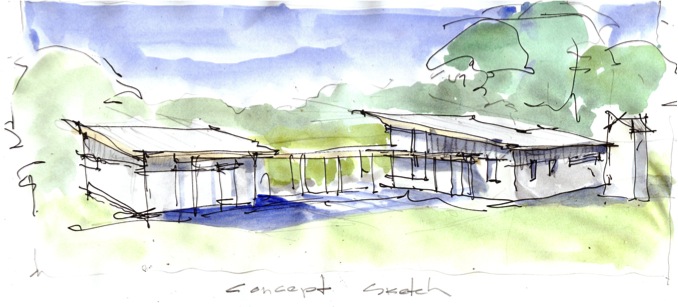
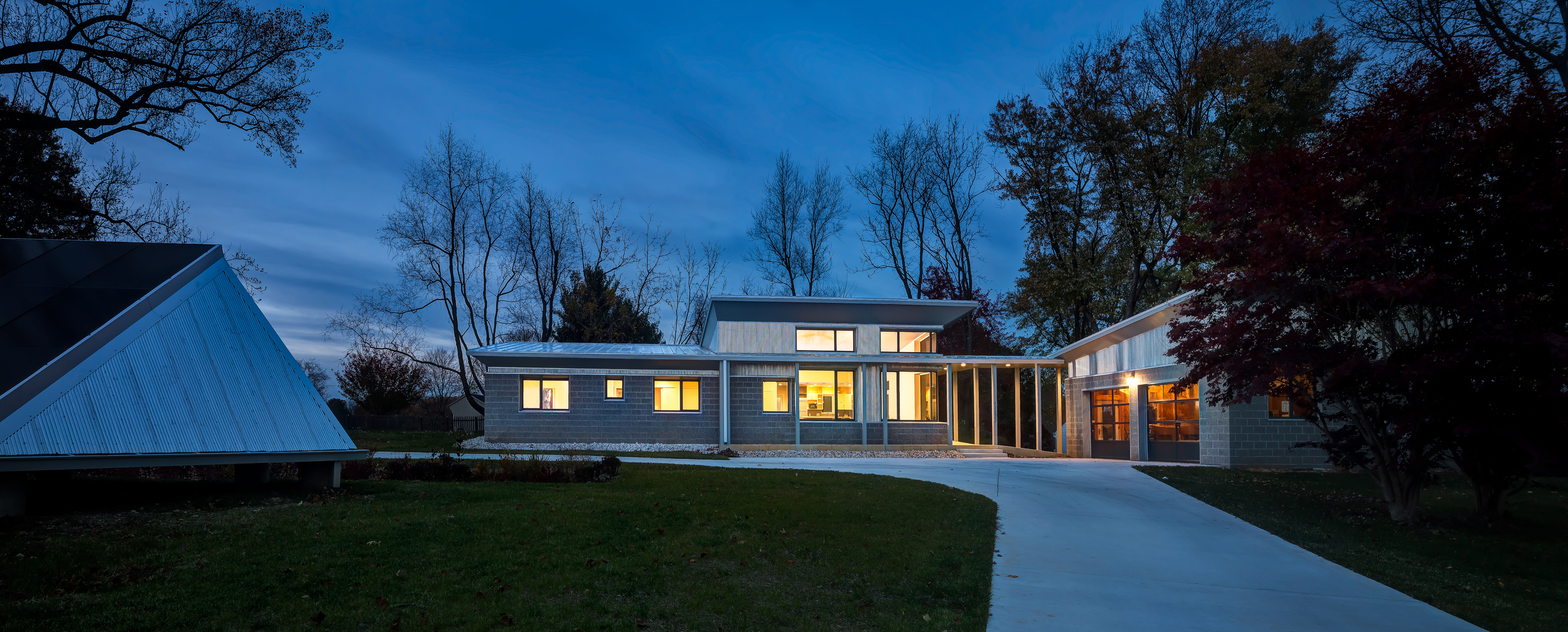
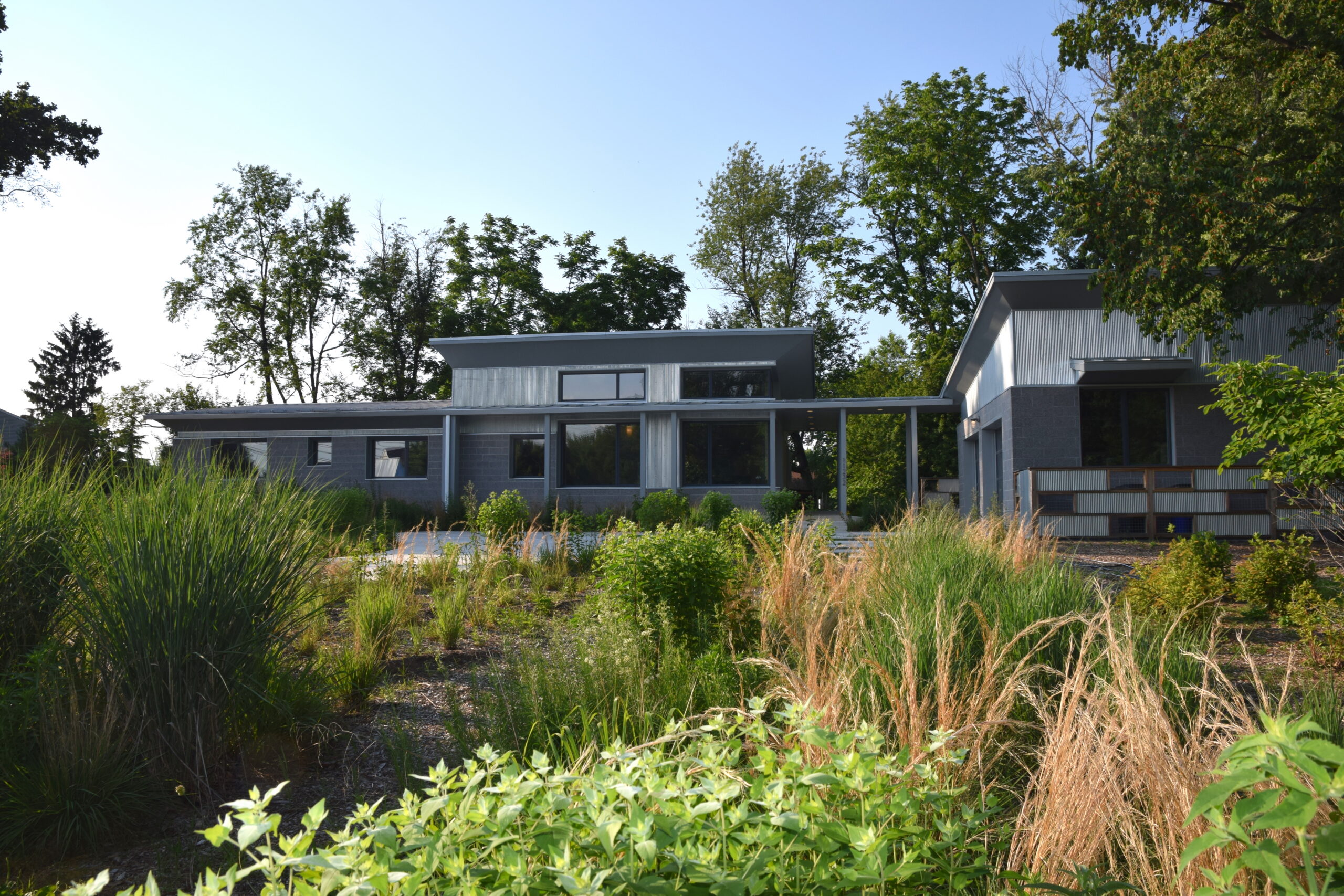
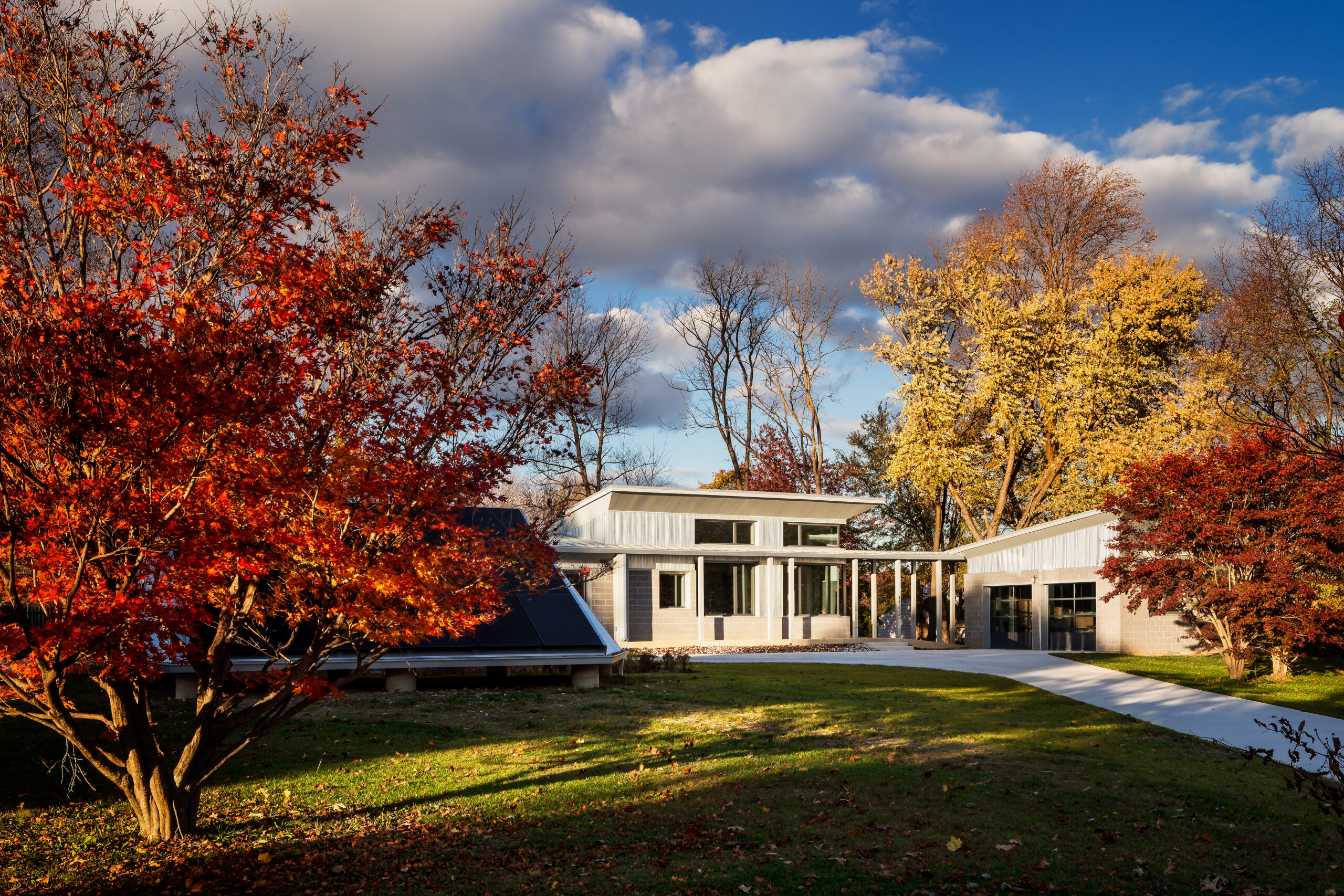
This net-positive home generates more energy than it consumes, and it may be one of the most energy-efficient single-family dwellings in Maryland. Every component of the project, from site selection to material use, was chosen with the intent to reduce carbon, eliminate runoff, and make positive use of waste, ultimately producing a house that contributes more than it takes. The house’s long south-facing elevation maximizes solar gain in winter while generous overhangs minimize overheating in summer. A prominently placed sculptural solar array serves as both a visual and functional feature, signaling the project’s dedication to renewable energy while offsetting carbon emissions.
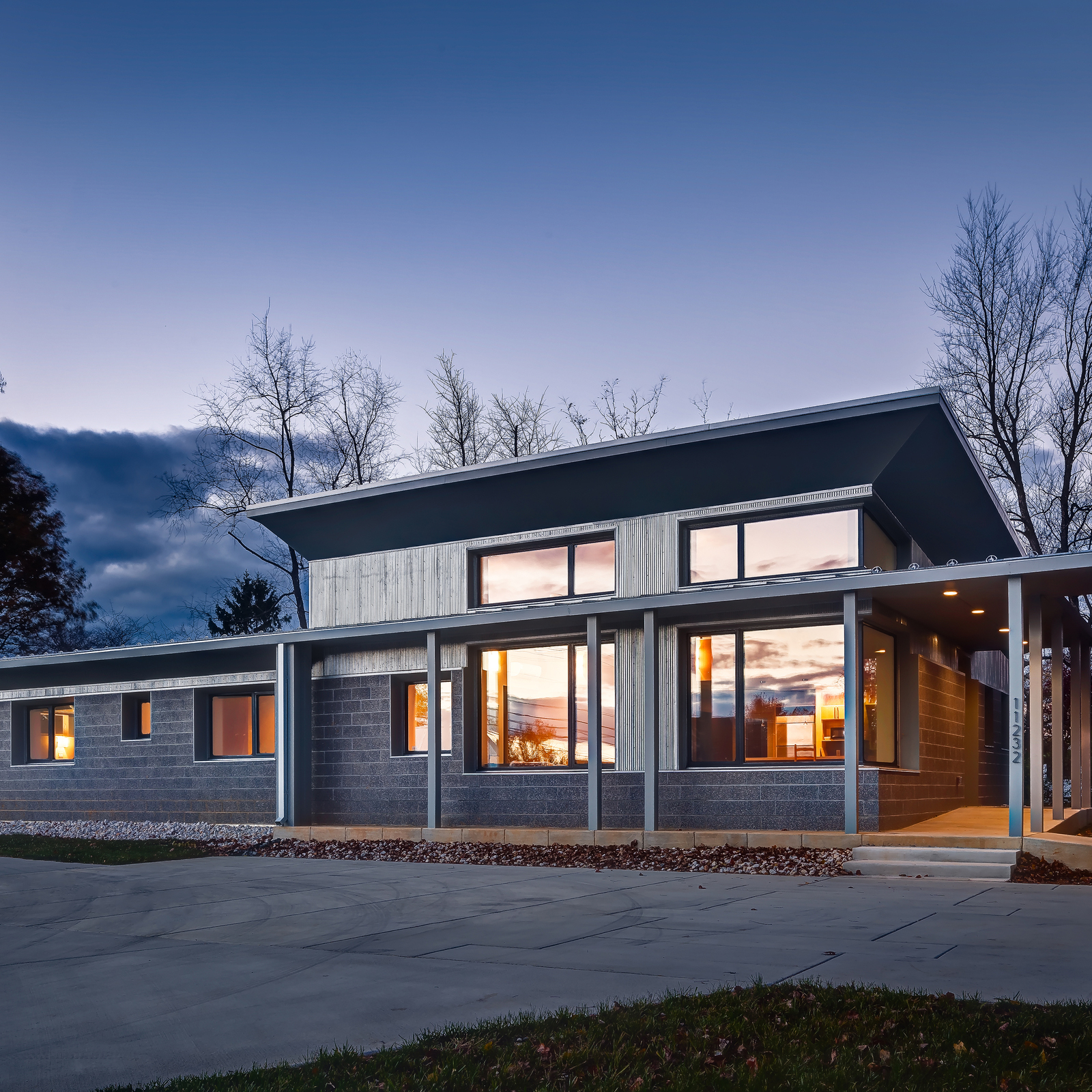
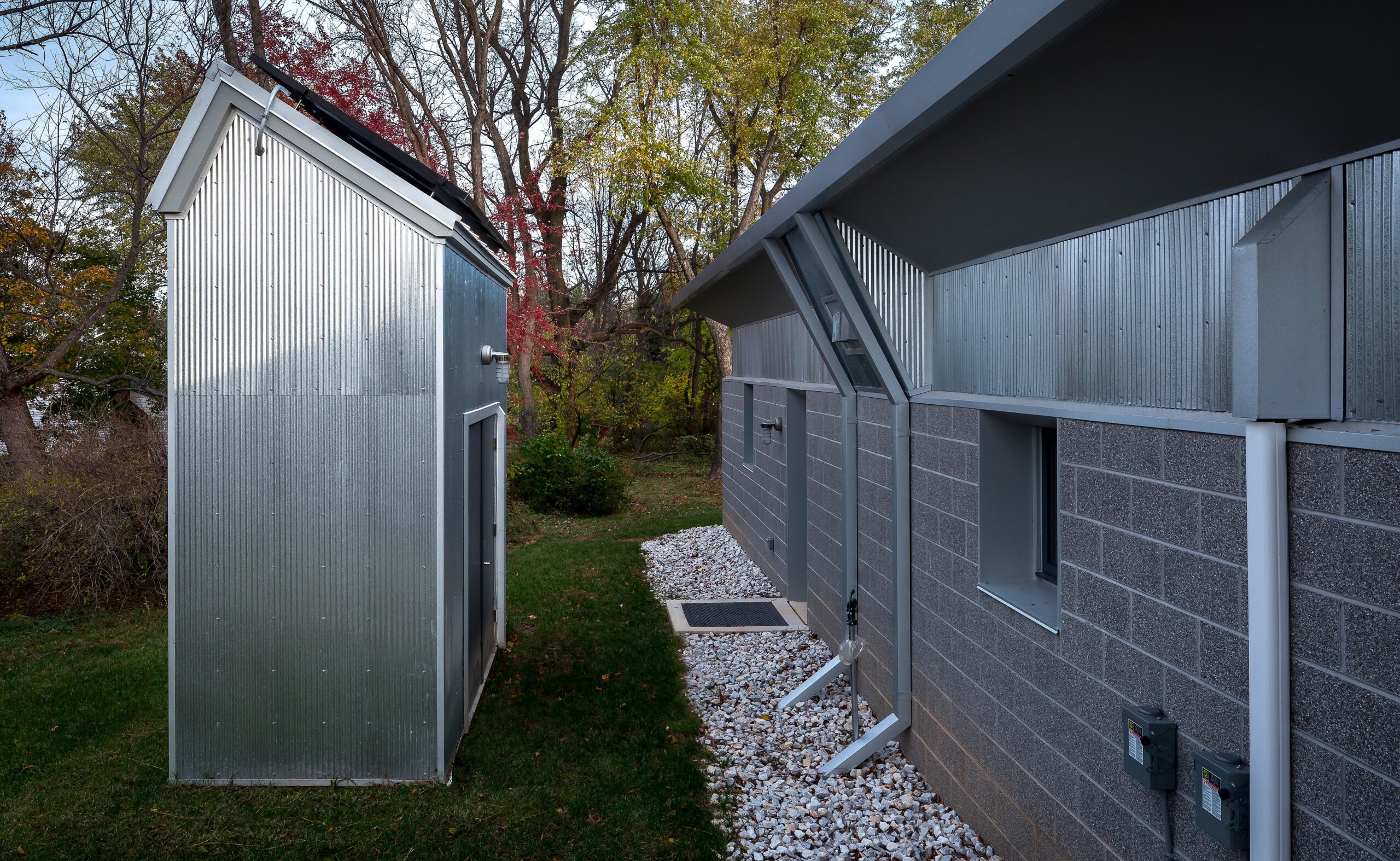
A 6kW photovoltaic array, paired with high-efficiency mini-split heat pumps, HRV and ERV systems, and an ultra-insulated envelope (R-30 under slab, R-70 walls, R-99 roof), allow the house to operate with remarkable efficiency. In one autumn month, the house generated over 500 kWh and used less than 150 kWh. Materials like Foamglass were used to insulate and support the foundation, offering durability, high compressive strength, and resistance to pests and moisture. Rainwater harvesting is comprehensive: water from the solar array is stored in a 1,500-gallon cistern, while the roof runoff is directed to a rain garden.
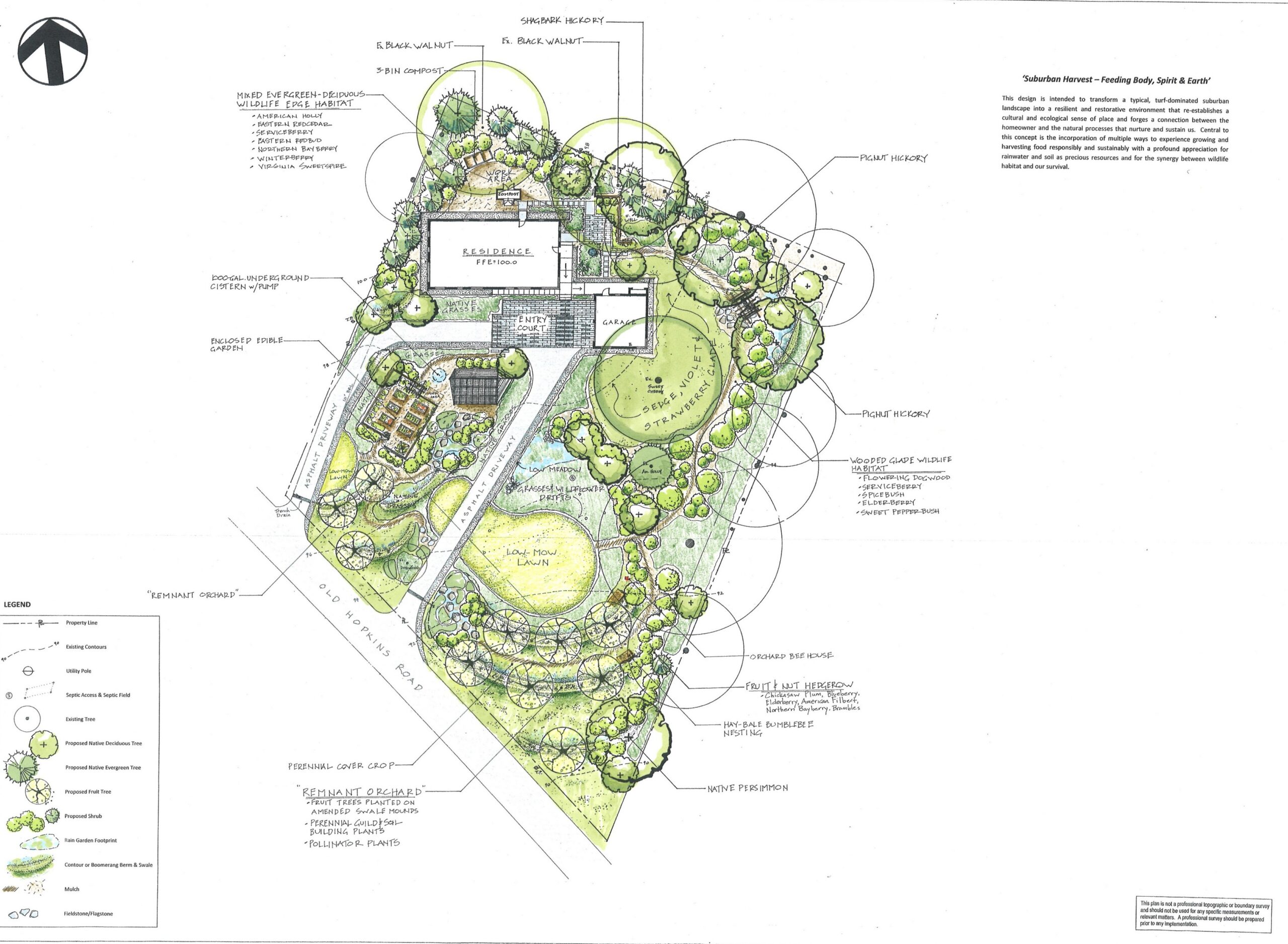
A commitment to biophilic design and psychological well-being informed every architectural move. Motorized blinds and deep overhangs control solar exposure and ensure year-round comfort. The surrounding garden includes native landscaping, productive plantings, and a sculpted rain garden that manages stormwater while enhancing biodiversity. Universal design principles ensure that the home is welcoming and accessible for all.